
Well, sort of. The Dow Jones U.S. Semiconductors Index ($DJUSSC) closed at another all-time high, but it did not set a new all-time high on an intraday basis, so there's more work to do.
But we continue to see individual stock breakouts in this key area of the market and Advanced Micro Devices (AMD) was the latest to do so. After nearly doubling in price during its 3-month torrid run higher from late October to late January, AMD consolidated for awhile as its overbought RSI tumbled from its January high above 80 to a subsequent low beneath 50 on February 21st. During uptrends, RSIs in the 40-50 zone during pullbacks can represent much better reward-to-risk entry points and that's exactly what we saw with AMD:
Enter Advanced Micro Devices, Inc. (AMD):
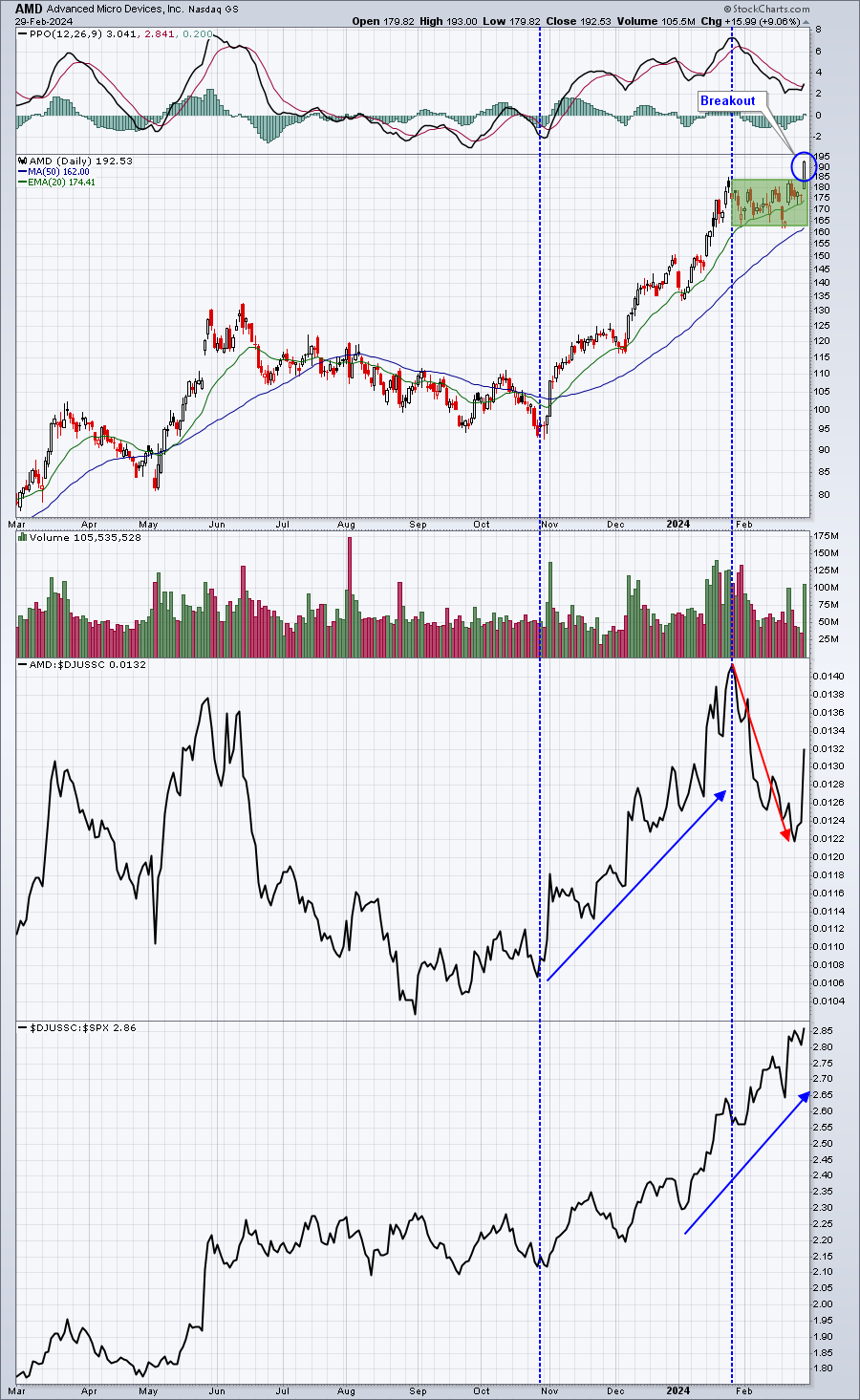
There's a very good lesson to learn on the AMD chart. When AMD was surging late in 2023, you can see that its relative strength line vs. the DJUSSC was also surging. But when AMD finally slowed down and took a bit of a break, its relative strength line dropped rapidly. This is an important lesson in how relative strength works. Many will give up on a stock during consolidation periods, because relative strength is lost for a period. But that's normal technical behavior when you rest during an uptrend and you're part of a very strong group. The group continues to rally, but a stock's own period of consolidation results in a significant loss of relative strength. That only becomes a problem if the stock's next move is down to break below the consolidation range. However, in AMD's case, Thursday's breakout was bullish and to the upside. Volume also surged again to confirm the breakout.
 |
Happy Trading!Tom BowleyChief Market StrategistEarningsBeats.comBetter Timing. Better Trades. |