
During normal market periods (2022 is not normal, by the way), we tend to see the S&P 500 and 10-year treasury yield ($TNX) trend in the same direction.
There's a clear positive correlation between the two. The reason is fairly simple: Strong economic conditions would favor the stock market (S&P 500), but those same conditions would tend to cause selling in bonds as rates rise. The price of bonds and the direction of yields are ALWAYS 100% inverse.
Therefore, we should expect to see the TNX and the S&P 500 move in the same direction - at least in the short- to intermediate-term. It's the rotation between the two markets that results in this positive correlation between the S&P 500 and TNX. With that in mind, check out this 2022 chart:
Enter 10-Year Treasury Yield ($TNX):
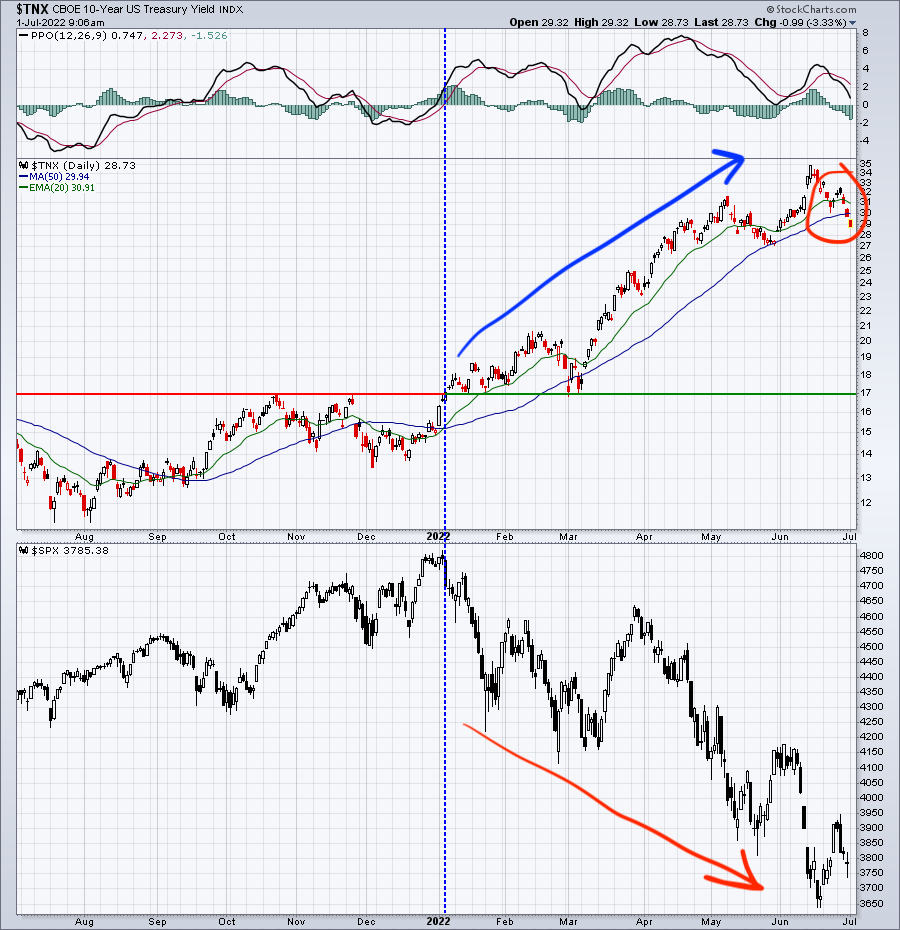
It's fairly clear that there's a negative, or inverse, correlation in these two in 2022. Yields are NOT rising due to strengthening economic conditions, which would benefit the S&P 500. Instead, it's inflationary pressures, which take a toll on both bonds and stocks. You don't want to own either asset class during inflationary periods.
Look back to the 1970s. Yields were rising throughout much of the decade and the S&P 500 tumbled during one of its worst bear markets ever. That's what inflation does.
Now look back at that TNX again, but this time let's just focus on the past two weeks. Including the falling yield this morning, the TNX has now dropped 58 basis points from 3.48% to 2.90%. It takes a lot of buying of treasuries to drop the yield by 58 basis points.
What does this mean?
- Who would be buying treasuries in the face of "runaway" inflation (which is what the media would have us all believe)?
- Is the bond market beginning to tell us that it's no longer worried about inflation? That's what it's telling me.
 |
Happy Trading!Tom BowleyChief Market StrategistEarningsBeats.comBetter Timing. Better Trades. |