
EB Daily Market Report - Sector Update - Tuesday, September 15, 2026
We're 24 hours away from what is likely to be the first fed funds rate hike since July 2023. At that time, the fed funds target rate moved up to 5.25%-5.50%, well above the current 3.50%-3.75% target. The 10-year treasury yield ($TNX) near 5.00% with the shorter end of the yield curve much lower is a major reason why regional banks (KRE) have more than doubled since May 2023. That "spread" has enabled regional banks to grow profits rapidly. If the TNX moves higher to keep pace with the Fed's upcoming hike(s), then the KRE should be able to continue to perform fairly well. However, if the TNX tops at 5.00% and begins to move lower, while the Fed is moving the fed funds rate higher, it will squeeze regional bank profits and could even result in a recession. So there is risk in the Fed changing course and hiking short-term rates.
There's no way to predict how the bond market will interpret everything that's happening right now and what's likely to happen later in 2026 and into 2027, so we'll just have to keep watching the charts.
In the meantime, with the Fed on deck with a likely 25-point rate hike tomorrow at 2pm ET, I found it very interesting to see several sector ETFs at key price support. Let's check them out. First, let's start with all of the aggressive sector ETFs:
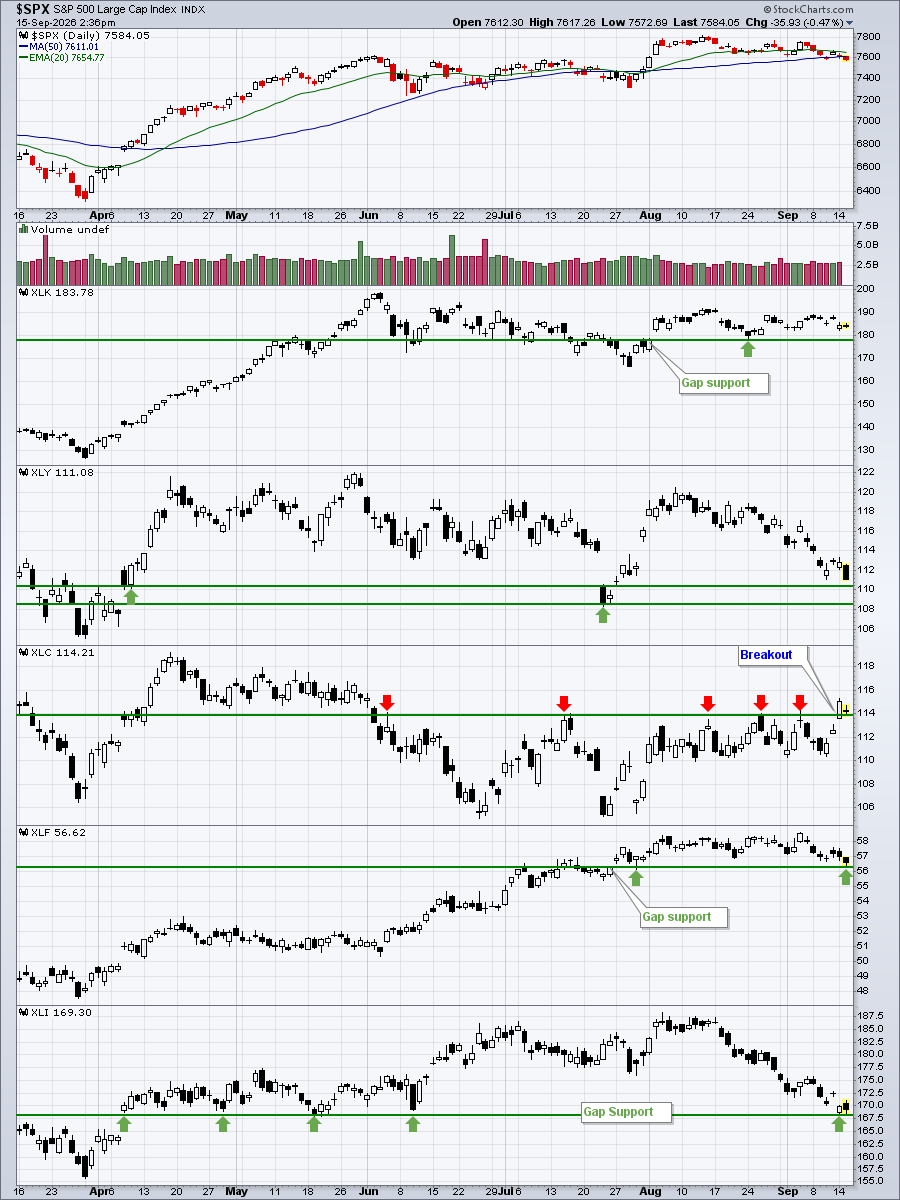
I see 3 of the 5 aggressive sector ETFs (XLK, XLF, and XLI) at or fairly near key gap support. One thing I'd keep in mind is that industrials (XLI) have entered their favorite 6-month stretch of the calendar year. Here's a seasonality chart of the XLI:
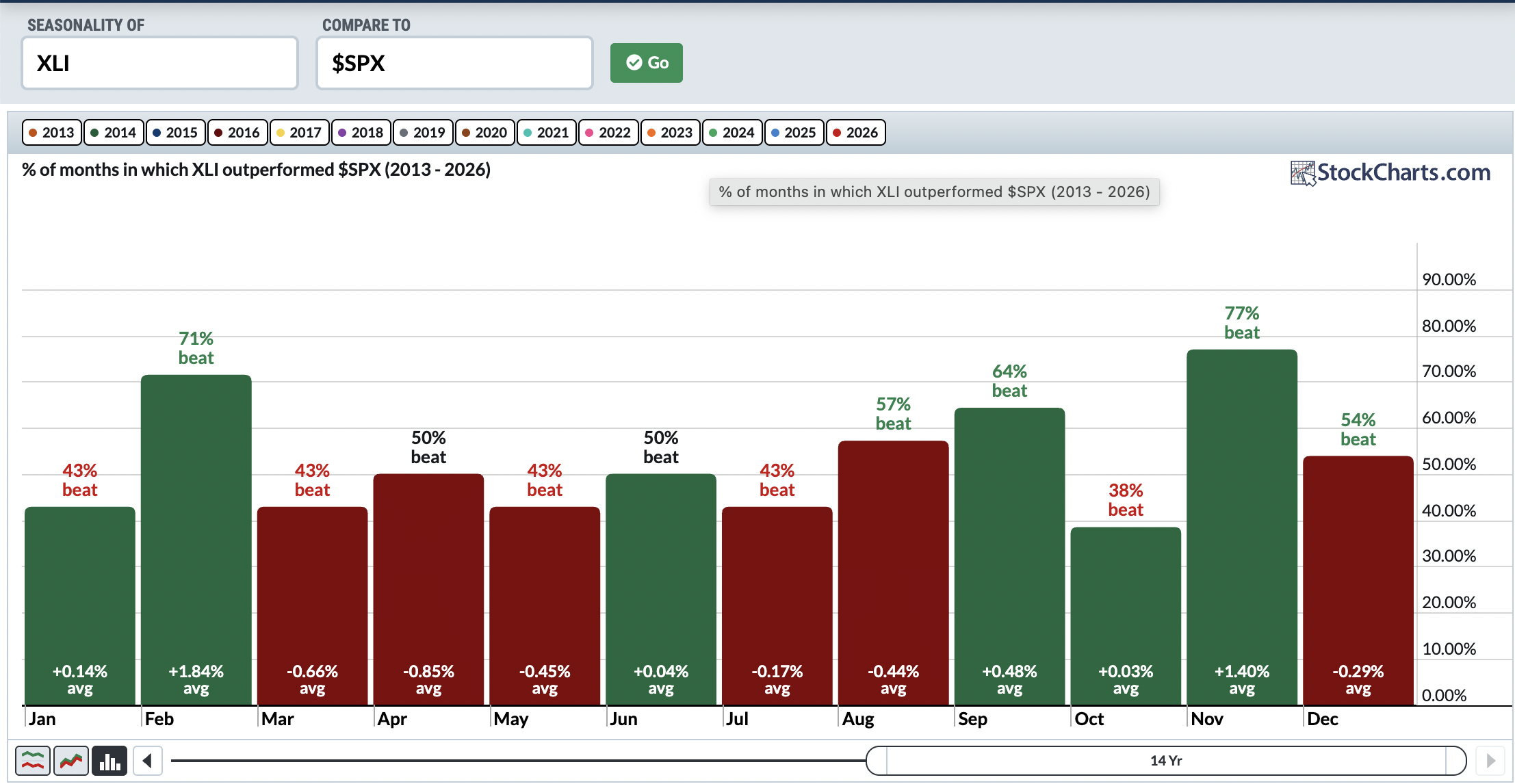
During the September through February time period, the XLI has outperformed the S&P 500 in 5 of these 6 months since 2013. When March hits, it's had the tendency to struggle, losing ground vs. the S&P 500 in 5 of the 6 months from March through August over this same period since 2013.
Seasonality tells us that the XLI is becoming more and more attractive as it tumbles.
I also found it interesting to see communication services (XLC) finally breaking out above price resistance near 114 that's held it back on 5 different occasions since early June.
Now let's look at the defensive sector ETFs:
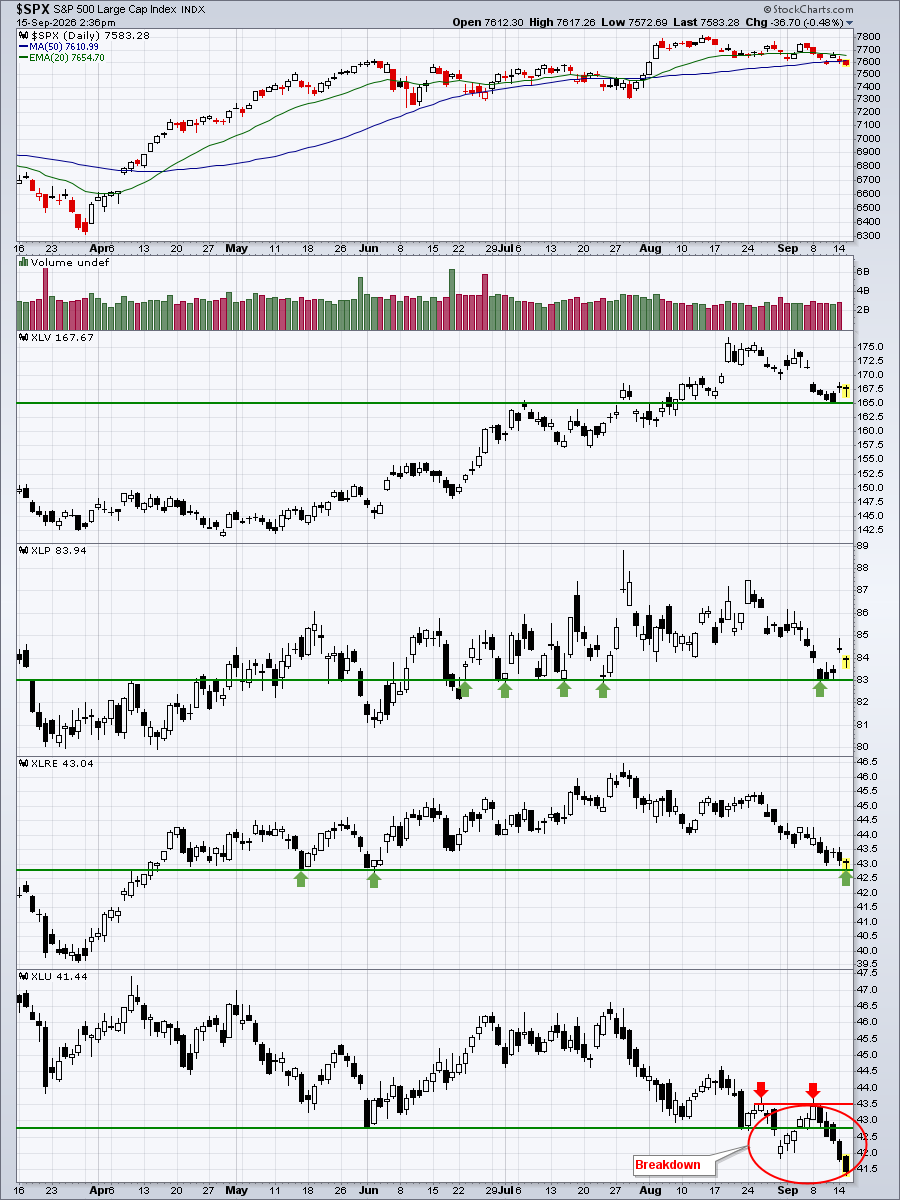
The consumer staples (XLP) and real estate (XLRE) sectors both seem to have hit key price support. The XLP has bounced a bit, while the XLRE is literally trying to bounce today. The utilities sector (XLU) definitely is hurt by a rising TNX and you can see the big drop and breakdown in the XLU in September as the TNX has risen to just above 5%. Should the TNX pull back at some point, I'd certainly expect to see money rotate back into the XLU. But as long as the TNX is rising, I'd stay away from the XLU. Those seeking income typically enjoy the solid dividend payouts of utilities companies, but if the TNX rises enough, many of these income-oriented investors will shun utilities and move to the safer treasury market.
I'm not providing a chart on energy (XLE) or materials (XLB), but the XLE is clearly dependent on the uncertainty of the US-Iran war and elevated crude oil prices ($WTIC). The XLB did reverse earlier today as it approached its recent price support level near 50 (July lows).
Max pain was beneath the price action on our major indices as we closed out last week, but the weakness this week has eliminated the downside risk. In fact, if stock prices drop as a result of the FOMC decision tomorrow afternoon, don't be surprised to see a quick counter rally as max pain would then favor the longs.
Happy trading!
Tom